





What is PRP?
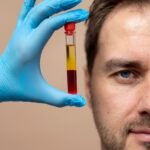
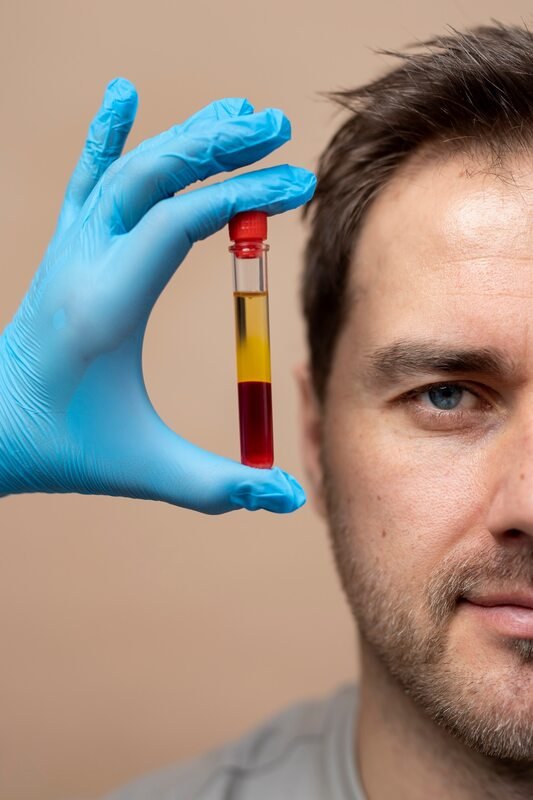
PRP is an autologous treatment, meaning it comes from your own blood. A small sample is drawn, spun in a centrifuge, and the platelet-rich portion is isolated. This concentrate is then injected into targeted areas to accelerate natural healing.
How Plasma Works
Platelets contain growth factors such as PDGF, TGF-β, and VEGF. These act as biological signals that promote cell repair, collagen synthesis, and angiogenesis. In simple terms, PRP amplifies your body’s own healing response by delivering a higher-than-normal concentration of these regenerative signals exactly where needed.
PRP is widely used for facial rejuvenation and under-eye treatments. It improves skin tone, elasticity, and hydration by stimulating fibroblasts to produce collagen and elastin. Over time, this leads to smoother texture and reduction in fine lines. It is especially useful for dull or aging skin where natural regeneration has slowed.
Impact on Hair
In hair restoration, PRP targets weakened or dormant follicles. It helps prolong the anagen (growth) phase of the hair cycle and may increase follicle thickness. Results are gradual, typically noticeable after multiple sessions, and work best in early to moderate hair thinning rather than advanced baldness.
PRP for Joints and Musculoskeletal Conditions
PRP has gained strong traction in orthopedics and sports medicine. It is used in conditions like knee osteoarthritis, tendon injuries (such as tennis elbow), ligament sprains, and mild cartilage damage.
In joints, PRP works by reducing inflammation and promoting repair of soft tissues like cartilage, tendons, and ligaments. Growth factors stimulate local stem cells and enhance the healing environment. Unlike painkillers that only mask symptoms, PRP aims to improve the underlying tissue quality.
For knee osteoarthritis, PRP can help reduce pain, improve mobility, and delay the need for more invasive procedures. In tendon injuries, it accelerates recovery by improving collagen alignment and strength.
Benefits in Joint Use
- May reduce chronic pain without long-term medication use
- Improves joint function and mobility
- Supports natural tissue repair instead of temporary relief
- Lower risk compared to surgical interventions
- Can delay progression of degenerative conditions
Course of Treatment (Detailed Approach)
Initial Assessment
A proper diagnosis is essential. Imaging such as MRI or ultrasound may be used to identify the extent of tissue damage. Not every condition responds equally to PRP, so patient selection matters.
Preparation Phase
Patients are often advised to stop anti-inflammatory drugs (NSAIDs) at least 5–7 days before the procedure, as these can interfere with platelet activity. Hydration and overall health status also influence PRP quality.
Procedure
Blood is drawn and processed to extract PRP. The injection is then administered directly into the affected joint or tissue, often guided by ultrasound for precision. The process usually takes 30–60 minutes.
Post-Procedure Care
Mild discomfort or swelling may occur for 24–72 hours. Patients are generally advised to avoid heavy activity for a few days but not complete immobilization. Light movement helps stimulate healing.
Number of Sessions
- Skin/Hair: Typically 3–4 sessions spaced 4–6 weeks apart
- Joints: Usually 2–3 injections over several weeks, depending on severity
Recovery Timeline
Initial improvement may begin within a few weeks, but full benefits often take 2–3 months as tissue regeneration is gradual. In joint conditions, results may continue improving for up to 6 months.
Maintenance
Some patients benefit from maintenance sessions every 6–12 months, especially for chronic conditions or ongoing degeneration.
Side Effects
PRP is generally well-tolerated since it uses your own blood. However, some mild and temporary effects can occur:
- Pain or swelling at the injection site
- Bruising or redness
- Temporary stiffness (especially in joints)
Rare complications include infection or nerve irritation if not performed properly.
Drug Interactions & Precautions
Certain medications can affect PRP outcomes.
- NSAIDs may reduce effectiveness by inhibiting inflammation needed for healing
- Blood thinners may increase bruising risk
- Corticosteroids can counteract PRP’s regenerative effects
Patients with platelet disorders, severe anemia, active infections, or certain chronic diseases should avoid PRP or proceed with caution under medical supervision.
Final Perspective
PRP sits at the intersection of regenerative medicine and functional recovery. Whether used for skin, hair, or joints, its strength lies in enhancing the body’s own repair system rather than replacing or suppressing it. Results are not instant, but when applied correctly and consistently, PRP can offer meaningful, long-term improvement across multiple areas.
Written by : Farokh Shabbir
References
- (PRP – Skin, Hair, Joints)Zhang, Q., Liu, T., Gu, Y., Gao, Y. and Ni, J. (2022) Efficacy and safety of platelet-rich plasma combined with hyaluronic acid versus platelet-rich plasma alone for knee osteoarthritis: a systematic review and meta-analysis, Journal of Orthopaedic Surgery and Research, 17, 499. Available at: View article (Springer Link)Zhao, J., Huang, H., Liang, G. et al. (2020) Effects and safety of the combination of platelet-rich plasma (PRP) and hyaluronic acid (HA) in the treatment of knee osteoarthritis: a systematic review and meta-analysis, BMC Musculoskeletal Disorders, 21, 224. Available at: View article (SpringerLink)Raeissadat, S.A., Ghazi Hosseini, P., Bahrami, M.H. et al. (2021) The comparison effects of intra-articular injection of PRP, PRGF, hyaluronic acid and ozone in knee osteoarthritis: a randomized clinical trial, BMC Musculoskeletal Disorders, 22, 134. Available at: View article (SpringerLink)Bakhsh, M., Bakhsh, K., Saleem, M. et al. (2023) Clinical outcome of platelet-rich plasma injections in early knee osteoarthritis, Journal of Population Therapeutics and Clinical Pharmacology. Available at: View article (JPTCP)
Shen, L. et al. (2020) Role of platelet-rich plasma in the treatment of osteoarthritis: a meta-analysis, PubMed indexed journal. Available at: View abstract (PubMed)
- Hair & Dermatology Gupta, A.K. et al. (2023) Novel vs modified platelet-rich plasma therapy for hair loss: a systematic review and meta-analysis, Dermatologic Therapy / PubMed indexed. Available at: View abstract (PubMed)Gentile, P. et al. (2018) The use of platelet-rich plasma in aesthetic and regenerative medicine: a comprehensive review, Aesthetic Plastic Surgery. Available at: View abstract (PubMed)
- Key Supporting Insight (Mechanism & Regeneration)Ghobadi, F. et al. (2025) Advanced 3D-printed multiphasic scaffold with optimal PRP dosage for chondrogenesis, Tissue Engineering Research (preprint). Available at: View paper (arXiv)